Stone at the edge of the square
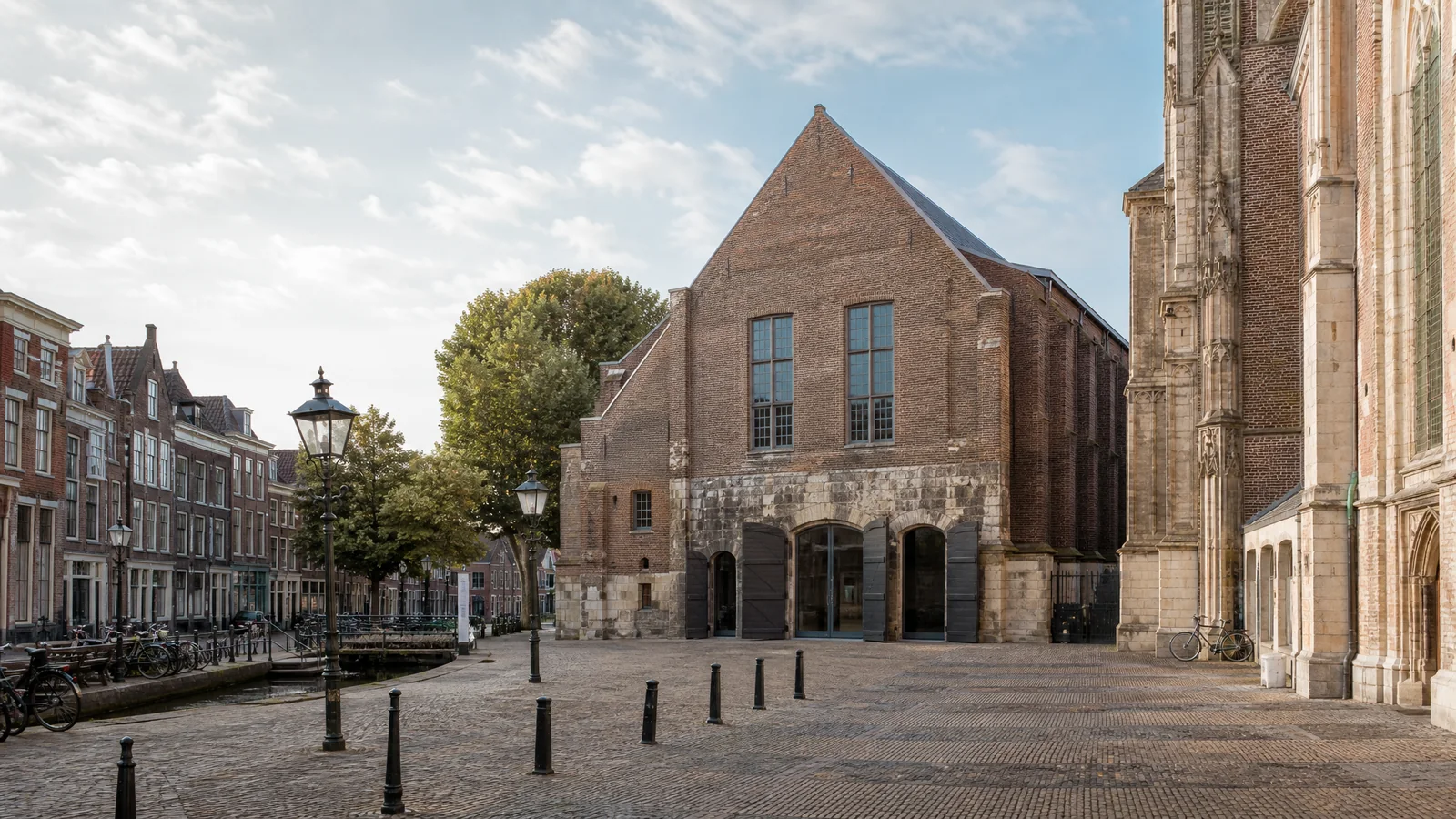
The Vleeshal does not stand in the middle of Grote Markt, but along its edge. That position changes how you see the square. The facade pulls attention downward, toward stone, arches, shadow and the line between open space and entrance.
Where the Bavo gives the square height, the Vleeshal makes its scale tangible. Old material remains part of daily city life: terraces, market movement, museum visits and people simply passing through.
Looking at scale
A building like the Vleeshal works slowly. From a distance you see its place on the square; close up, rhythm, depth and material appear. The facade is not a backdrop, but a piece of the city that changes with weather, light and use.
That makes it a useful place to step out of an automatic route for a moment. Not by blocking the passage, but by watching from the side as square and building hold each other in place.
Museum details belong with the source
For current exhibitions, opening times or tickets, use Frans Hals Museum or the location’s own visitor information. Programmes change; local context should not guess those details.
The place itself remains. The Vleeshal helps you see Grote Markt less as scenery and more as layered city space: a square where trade, heritage, culture and everyday movement overlap.
A quieter anchor on Grote Markt
Among the larger movements of the square, the Vleeshal is a quieter anchor. Not because the building is modest, but because it asks for attention without shouting.
For a walk through Haarlem city centre, that is useful. Once you notice stone and scale here, smaller streets become easier to read too.
Frequently asked questions
Where is the Vleeshal?
The Vleeshal is located on Grote Markt in Haarlem.
Is this an exhibition agenda?
No. Use Frans Hals Museum or official location information for current exhibitions, times and tickets.
Why is this in Haarlem city guide?
Because the Vleeshal helps visitors read Grote Markt through heritage, scale and shared public space.