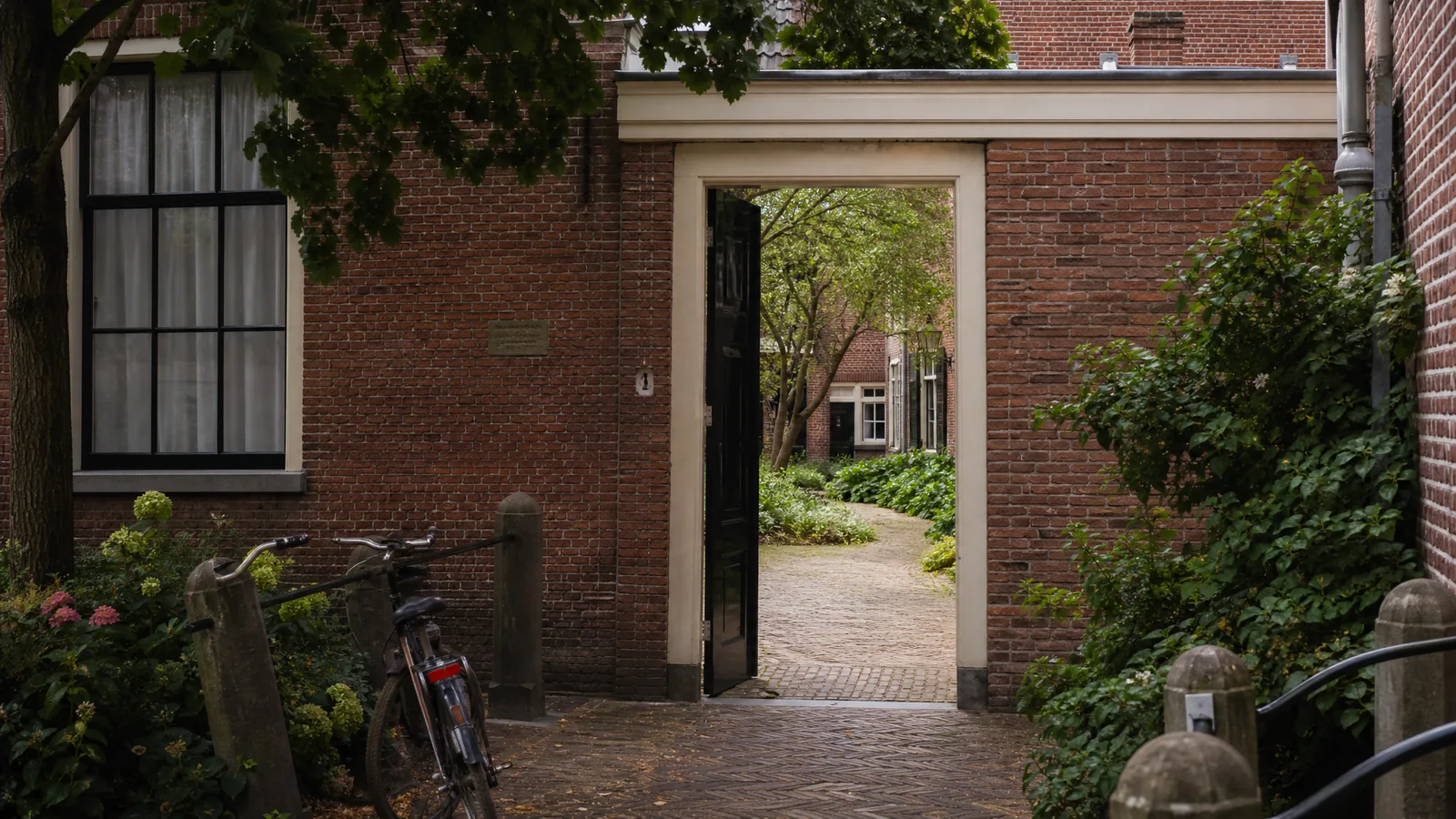
Hofjes ask for quieter looking
Haarlem hofjes are quiet courtyards or residential courtyards that give the city centre a different scale. They make Haarlem feel smaller, calmer and more human.
Hofjes make Haarlem tangible: gates, pavement width, quiet and the shift from street to courtyard all change how the city feels.
Why hofjes fit Haarlem
A hofje changes how you look at the city. From a busy street, you enter a smaller space with gates, facades, garden edges and often a lot of quiet.
That shift is typical for Haarlem city centre: narrow routes, historic details and places where people naturally move more gently.
Notice them without disturbing them
Many hofjes are not museum settings. Some are residential, some have limited opening times and some doors stay closed for a reason. Respect is part of the experience.
Do not use flash, do not photograph residents, avoid blocking entrances and keep voices low. If a place is closed, that boundary is part of the city.
- Check whether a hofje is accessible.
- Move calmly and keep the stop short.
- Keep gates and entrances clear.
- Do not photograph identifiable people.
- Leave the place as you found it.
A better visual choice for Haarlem city guide
For hofje articles, a quiet detail works best: an entrance, brickwork, garden edge or facade without people in the frame. The image does not need to show everything; a small detail keeps the place credible.
That keeps the visual local, calm and credible.
Frequently asked questions
Are all Haarlem hofjes public?
No. Some hofjes have limited access or are closed. Always check local information and respect doors, residents and quiet.
Can you photograph hofjes?
Only photograph without identifiable people in the frame and respect any local rules. When in doubt, do not photograph.
Why does this topic fit Boerejongens Haarlem?
Because hofjes say a lot about Haarlem city culture: quiet, small scale, residents and respectful looking.